Menu
Case Studies
All case studies Fixing a Founder’s Disambiguation The One-Person Inbound Engine Fixing Google Ads 7-Figure Pipeline from ChatGPT Blog to $12.4M Inbound EngineTools
All toolsFree tools
Canonical Bio BuilderPaid tools
Signal BuilderReference materials
AI Visibility Glossary UnInvisible AI BriefModels / Frameworks
The Framework Library The Builder’s LogAEO Industry Guides
All guides SEO & AEO for Home Remodelers SEO & AEO for HVAC Companies SEO & AEO for Plumbers SEO & AEO for Painting Contractors SEO & AEO for Real Estate Agents SEO & AEO for Tax Professionals SEO & AEO for Marketing Agencies SEO & AEO for Independent MusiciansAEO Basics
Start here: The Hub The Mental Model Build a Canonical Bio When the Fetch Tool Fails 3 LLM Behaviors Legibility, Eligibility, Extractability The Minimum Viable Knowledge Graph Work With MeWhat Thanos, Gambit and Moana 2 Taught Me About Content Ecosystems
Movies aren’t just made to be watched anymore. They’re built to be shared, and fans carry the story long after the credits roll.
This part: fans carrying a story past the box office. Next: what a $250M “flop” taught me about brand ecosystems. Read Part 1 →
Studios are building movies with shareable moments baked in: a dance, a meme line, a lobby backdrop made for photos.
The fans do the rest. They remix those moments across TikTok, Instagram and YouTube, and the story keeps living long after opening weekend.
For marketers, the question isn’t whether to lean into this. It’s how to make your own work worth sharing.
The Moana 2 dance challenge and the TikTokification of cinema
If you’re anything like me, you notice the little things. This year, part of my family’s Thanksgiving Day festivities included a trip to see Moana 2 with my daughters. We were stoked. Been waiting for months. MONTHS! It was a fun activity for Thanksgiving, for sure. But here’s what I noticed: early in the movie, there was a dance scene so short, so cute and so doable that I immediately thought, This is going viral. Get ready for the Moana 2 dance challenge trend.
Disney’s Moana 2 | Dance Battle. 11M views as of December 4, 2024. And this dance battle clip was posted by Disney.
I could already envision little girls and their Big Sis! (IYKYK) standing in living rooms doing the dance together. Little Sis still living at home, Big Sis home from college. That moment made me think about how movies are increasingly folding into social media culture. It’s not just marketing anymore. It’s storytelling itself being built for the world of TikTok and Instagram Reels.
This isn’t new, but it’s becoming more deliberate, more baked into the DNA of movies themselves.
This is about to be some mom stuff, coupled with some Marvel stuff, from the perspective of a content marketing visibility strategist. So… if moms and geeks bore you, skip this particular article about marketing.
Before the Moana 2 dance challenge, there was Thanos
I think the first time I really paid attention to this trend was back in 2018, when Avengers: Infinity War dropped. Marvel launched an influencer campaign for Doctor Strange that I saw, but… meh. Didn’t compel me to see the film.
When Infinity War rolled around, I wasn’t a die-hard Marvel fan. To be honest, I couldn’t really figure out from the trailers what the movie was even about, so I wasn’t going to see it.
Comic book fans already knew what was up. Me? I had skipped Doctor Strange because he’s a wizard, and Guardians of the Galaxy because I wasn’t about to sit through two hours of a movie that starred a CGI raccoon. Plus, Thanos was purple. It all just started to feel a little Neverending Story-ish when I’d gotten used to Russo Brothers action sequences.
But then my social media feed blew up. There were memes. Everywhere.
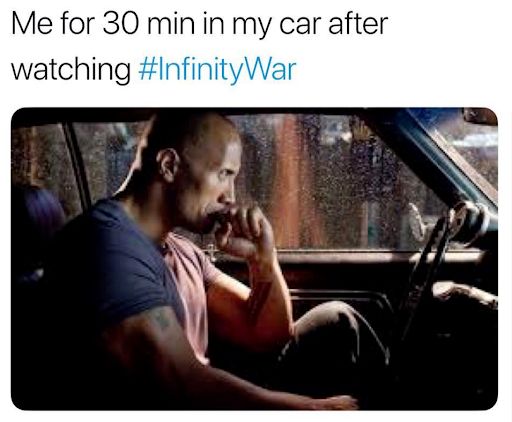
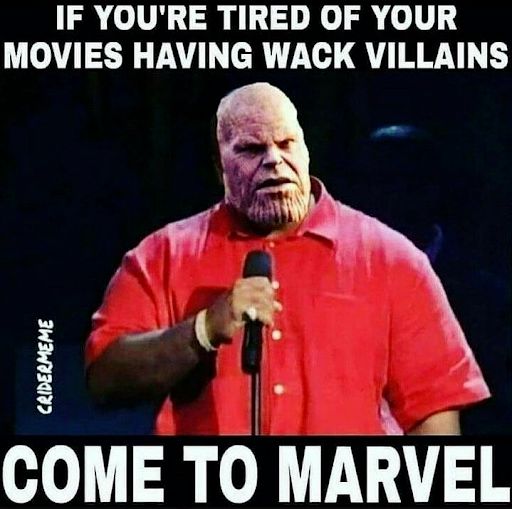
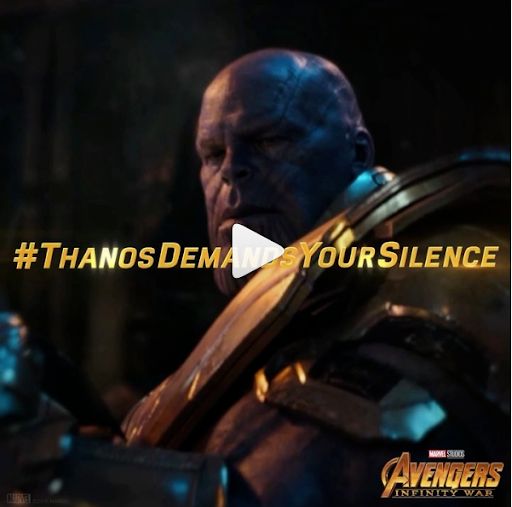
My favorite? A warning Marvel published from its then-Twitter account to would-be spoilers: “Thanos demands your silence.” A callback to the first Guardians, ironically enough, when Ronan the Accuser was told, “Thanos demands your presence. Now!”
Then my network of friends (lawyers, professors, teachers, geneticists) seemed to be emotionally reeling after seeing the movie. Looking back, I see that Infinity War wasn’t just a movie. It was a social moment.
I wrote about this the week it happened: Social Media Did What the Franchise (and the Infinity War Trailers) Could Not Do. What finally got me into the theater wasn’t a trailer, and it wasn’t a celebrity. It was Leanne, a high school classmate with about 1,000 Facebook friends, posting about how hard the movie hit her. I can’t remember us ever having a conversation. But I watch her feed. She’s the unwitting influencer who converted me.
By the time my social feed convinced me to see the movie, my expectations were pretty high. I wanted to see what all the fuss was about. And they were right. That movie was devastating. It was quite the somber theater experience. #shooketh
So… I bought the movie the very first day it was released. And I subscribed to Disney+ when it launched, for the privilege of watching Thanos snap away half of all living things whenever I feel the urge. Yay, me! 🥴
At some point, the MCU stopped being just about the movies. Marvel has a sophisticated social marketing machine that turns fandom into fuel. (How else do you explain RDJ returning as Doom?)
The dance of movies and memes
Fast forward to now, and the Infinity War playbook is being written into nearly every blockbuster, but with TikTok and Instagram in mind.
I mean, let’s talk about Deadpool & Wolverine. The opening montage with Ryan Reynolds going full chaos mode to “Bye Bye Bye” (and the choreography) didn’t just get a laugh. It put NSYNC back on the charts. My kids, who barely know what a boy band is, were suddenly doing that old-school choreography at an elementary school party with their friends.
And then there was Channing Tatum’s Gambit moment. “Do you know how long I’ve been waiting for this? Woo, I’m about to make a name for myself here today.” That meme exploded across TikTok and Instagram.
Listen… every time I saw Gambit in a different social situation asking if we knew how long he’d been waiting for this, I laughed.
- Gambit in HR.
- Gambit with $20 at the Scholastic Book Fair.
- Gambit at the buffet.
It was everywhere. So much so that my seven-year-old cleverly co-opted it as we sat down at Kura for sushi: “Do you know how long Mom’s been waiting for this? She’s about to make a name for herself today.”
Took me out.
And then, as if there wasn’t already enough buzz, Ryan Reynolds casually published the post-credit scene that WASN’T IN THE MOVIE to his social account. Not in the theater, not in the extended cut.
On. His. Feed.
INSANE.
Are they writing movies for the Interest Graph?
This isn’t just fun and games. It’s a masterclass in understanding the Interest Graph.
The Interest Graph is the invisible web connecting people to the niches and topics they care about, no matter how obscure or specific. This is how fandom works now.
(I dug into this more in a piece on the Interest Graph.)
And it’s not just Marvel.
Studios are building entire marketing strategies around the Interest Graph because they know today’s awareness campaigns don’t end at the box office. They start there and explode online. TikTok dances, meme templates, reaction videos and prediction videos become their own form of storytelling, each one adding a new layer to the original narrative.
of fans ages 14–44 use YouTube weekly to watch content about the person or thing they’re a fan of.
YOUTUBE CULTURE & TRENDS REPORT · 2024views on fan-made reactions, deep dives and remixes of the GTA VI trailer in 24 hours, on top of the trailer’s own 93M.
YOUTUBE CULTURE & TRENDS REPORT · 2024of Gen Z consider themselves creators, ready to remix a moment into something new.
YOUTUBE CULTURE & TRENDS REPORT · 2024That means studios aren’t just making movies. They’re creating content-powered ecosystems where fans can discover, remix and amplify their stories. And this is where the magic happens: when niche fan communities latch onto a moment, they amplify it far beyond its original context.
Take the Grand Theft Auto VI trailer. It racked up 93 million views in 24 hours, but fan-made reaction videos, deep dives and remixes generated another 192 million views in that same window. The story didn’t just belong to Rockstar Games. It belonged to the fans.
The story didn’t just belong to the studio. It belonged to the fans.
Studios know this. That’s why Marvel and others design moments that don’t just live on the screen but thrive in the hands of creators.
From awareness to discovery to buzz to loyalty to legacy
Movies as moments: from the screen to the feed
Watching Moana 2 with my daughters, that short, sweet dance scene was an instant standout. I could already envision the TikTok clips, the hashtag trends and the Big Sis–Little Sis duos flooding my feed in the coming weeks.
Studios are selling moments packaged as movies. And it works. 66% of Gen Z say they spend more time engaging with content about a movie than watching the movie itself. That stat says it all.
(Bruv, if you knew how many hours I spent watching Gambit-related content on YouTube before Reynolds pushed that post-credit scene to his socials, trying to figure out if Gambit would be back…)
And it’s not just the movies driving this engagement. It’s the entire theater experience! Dude, the Moana 2 boat backdrop at Emagine theaters was interactive, engineered to turn a family outing into a social media moment.
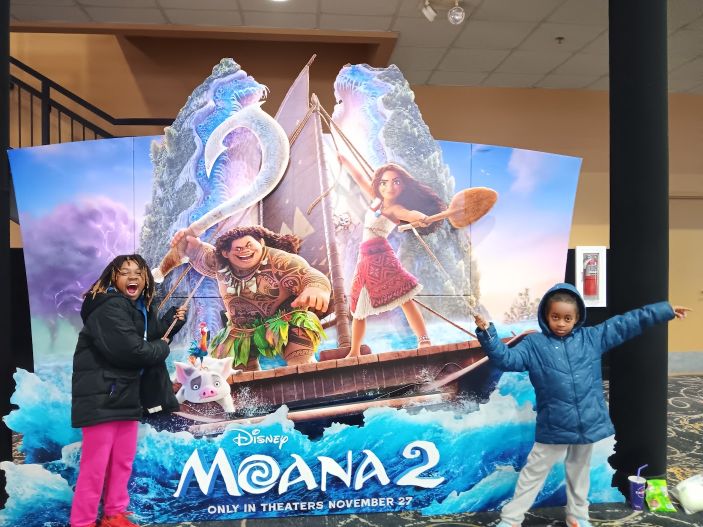
Same goes for Transformers One. My kids lined up with Optimus and the gang in front of the huge, colorful backdrop. Plus the take-home posters for Transformers One and Sonic 3 that lined the shelves outside the theater are now lining the walls of my kids’ game room. FYI, Transformers One came out September 20 and Sonic 3 comes out December 20. So we’re talking about an extended engagement strategy.
Streaming’s back-end game: Red One
I don’t know nearly enough about this topic, but I find the whole content ecosystem fascinating. So pardon me if you know all about this and I sound like a toddler discovering frogs for the first time.
So, here goes…
Dance challenges, backdrops and posters work brilliantly for theatrical releases, creating buzz on the front end. But I found out that streaming platforms play a different game, one that’s all about back-end engagement.
Content ecosystems IRL
Red One is Amazon’s $250 million holiday blockbuster. It didn’t break box office records, but from what I’ve read, that’s not how its success will be measured. For Red One, engagement isn’t happening in theaters (okay, a little: my kids took pics in front of the backdrop for that movie, too). It’s happening on Prime Video, in subscriptions and extended platform loyalty. My kids and I already have plans to load it up alongside Buddy the Elf on Christmas Eve. The movie has cross-generational appeal: Chris Evans and Dwayne Johnson for the kiddos, and hot Santa for me. (Bro, Santa’s jacked! I said what I said.)
Just like Moana 2 invites TikTokers to engage immediately, Red One is built to keep viewers hooked long after the credits roll. Amazon knows a star-studded holiday tentpole can draw new subscribers who stick around for Jack Ryan.
Family, Red One is an attribution source. 🤯🤯
Tracking success by how long viewers stay subscribed. That. Blew. My. Mind.
From movies to ecosystems: loyalty and stickiness
I totally get this. My Paramount+ subscription? I got it to binge the Mission: Impossible franchise, and now I’m sticking around for the Frasier reboot. Max? All the DCEU films (hello, Man of Steel… with yo perfect teeth). 😏
Whether it’s a viral dance challenge or a holiday blockbuster, the principle is the same: movies today aren’t just about ticket sales. They’re about creating cultural and platform-level stickiness. These strategies make sure the story, and the audience, stay engaged long after the final scene fades to black.
The future of storytelling is still share-worthiness
Cinema isn’t just about what happens on the screen anymore.
It’s about what happens after: on our timelines, in our Reels, in our memes. Fans are consuming movies and then co-creating content ecosystems that extend the life of the film.
For us as marketers (and as moms, geeks and visibility strategists), the question isn’t whether we should lean into this. It’s how. How do we make our own content and campaigns share-worthy? How do we spark moments that live on in people’s feeds?
Because the truth is, the lines between Hollywood and social media are blurring. And that, my friend, is a very visible example of the future of storytelling.
Visibility Engineer and founder of Five-Talent Strategy House, a Detroit-based AI visibility and entity architecture consultancy. Sixteen years in B2B writing and search. Origin Stories are where her frameworks come from: the real situations, usually messy, where a repeatable pattern first showed up.
On a strategy call, we’ll look at where your audience already talks about what you do, and how to build moments they’ll carry for you.
Schedule a Strategy Call